- Music Marketing Trends by Jesse Cannon
- Posts
- Artist Development & World Building Work Book (Part 2)
Artist Development & World Building Work Book (Part 2)
Reflecting on powerful art and how to position yourself as an artist

Jesse Cannon
April 09, 2026
In partnership with

Music Marketing Trends is a Newsletter by Jesse Cannon that breaks down how musicians really get their music heard. If you know a story we should be telling or an artist we should cover just hit reply to this email.
Email Still Wins. Here's How to Use It Better.

59% of Americans say most marketing emails offer no real value. That's not a threat, it's an opening. Get the AI-powered playbook for building email campaigns that actually convert.
Inside you'll discover:
How top brands achieve 3,600% ROI from email marketing
AI personalization techniques that drive 82% higher conversion rates
Tactics that have delivered 30% better open rates and 50% higher clickthroughs
How to build sequences for every stage of the customer journey, from welcome to re-engagement
Download your free AI-powered email marketing playbook today.
There are two new chapters in the artist development workbook. You'll find them at the end of your current workbook — after the LAMES Analysis section, there's a chapter called Touchstones, and then right after that is one on Positioning.
Touchstones
This section is almost like a catalog of the best things that have really made you feel something.
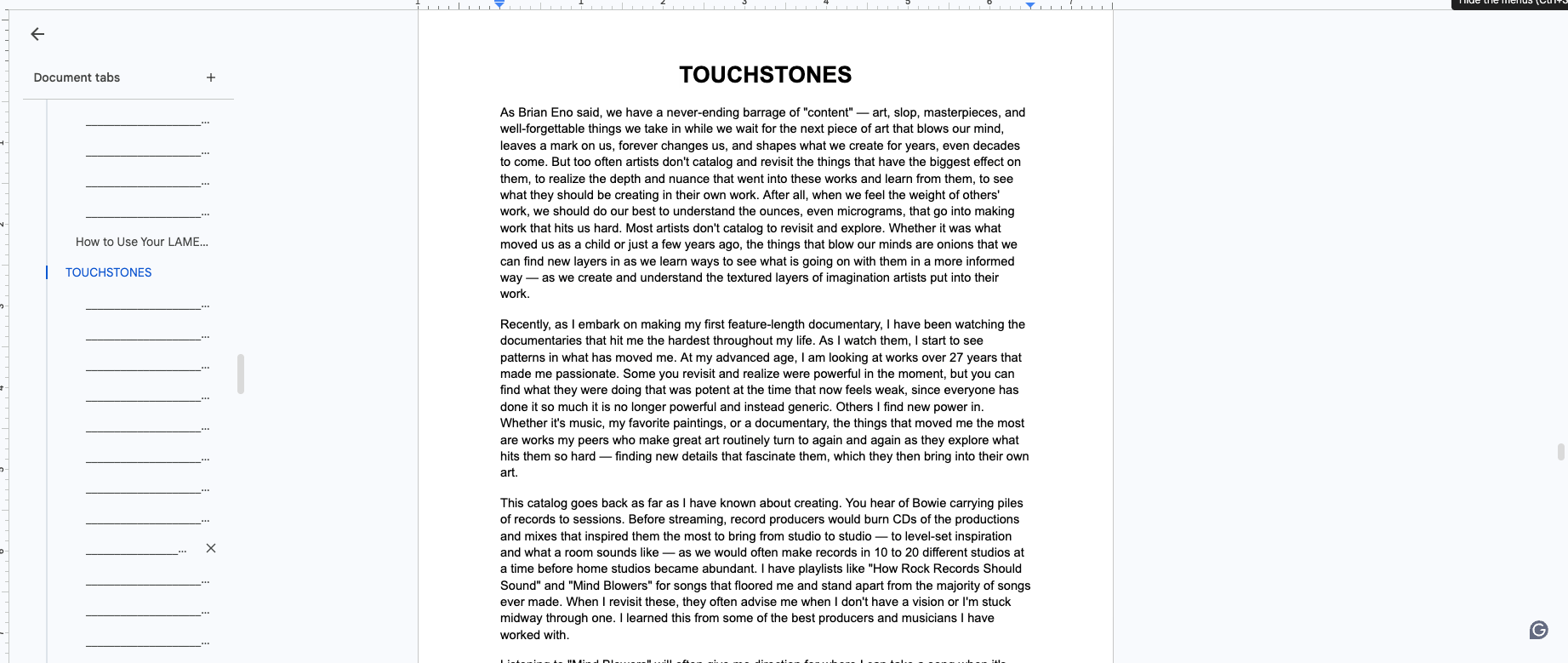
What I see over and over again is that the artists who really go on to greatness have these catalogs. They've saved up all the things that have really meant a lot to them, and they revisit them over and over, trying to find all the details — because they know what's hidden in there is a haystack of details that made them feel those things. There are millions of works put out every year, and these are the few that really, really move you. When that happens, we should be taking note and letting that lead us, because it instructs us on what makes us emotionally unique and will bring out more of our artistry.
It teaches us what we should do to make emotionally powerful things, because what was emotionally powerful in their work — when we take things from it, and then assemble a lot of people's different emotionally powerful things that are all different because they're different ones — that's where you get something new. You've had different experiences than everyone else, so when you assemble all of those together, that's where the new thing comes from.
That stuff is really, really important, especially when you start to combine it with other art forms — paintings, a nice landscape you saw in your daily life or on a vacation, your favorite movies, whatever. When you bring all of that together, that's when you get the really, really powerful art.
Enjoying this? Forward it to a music friend you’d like to be closer to and start a discussion!

Subscribe to Premium Subscription to read the rest.
Become a paying subscriber of Premium Subscription to get access to this post and other subscriber-only content.
Already a paying subscriber? Sign In.
A subscription gets you:
- • Read Paywalled Content
- • View Full Artist Dissections
- • View Album Rollout Breakdowns & Recaps In Full
- • Ask Lecturers Questions
- • Access To Full Unabridged Podcast Episodes
- • Discord Access
Reply