- Music Marketing Trends by Jesse Cannon
- Posts
- How To Find What Your Music Sounds Like
How To Find What Your Music Sounds Like
The Best Methods to Discovering Your REAL Genre Fans

Jesse Cannon
December 02, 2025
In partnership with

Music Marketing Trends is a Newsletter by Jesse Cannon that breaks down how musicians really get their music heard. If you know a story we should be telling or an artist we should cover just hit reply to this email.
Unify Your Coaching Experience to Unlock Revenue Growth

Your clients expect more than content, they expect an experience.
Join 7-figure business coach and former IBM marketing executive, Julie Ciardi, for a free workshop on how she scaled her coaching business to $3.M by prioritizing a premium client experience on Kajabi.
Julie will show how combining courses, coaching, community, and her private podcast into one branded hub creates a cohesive experience that boosts engagement, increases loyalty, and drives long-term revenue, all powered by Kajabi’s full suite.
How to Figure Out What You Sound Like
Musicians constantly ask me: "How do I figure out what I sound like?" It's hard to market your music unless you know which artists and microgenres to tie your work to for targeting fans.
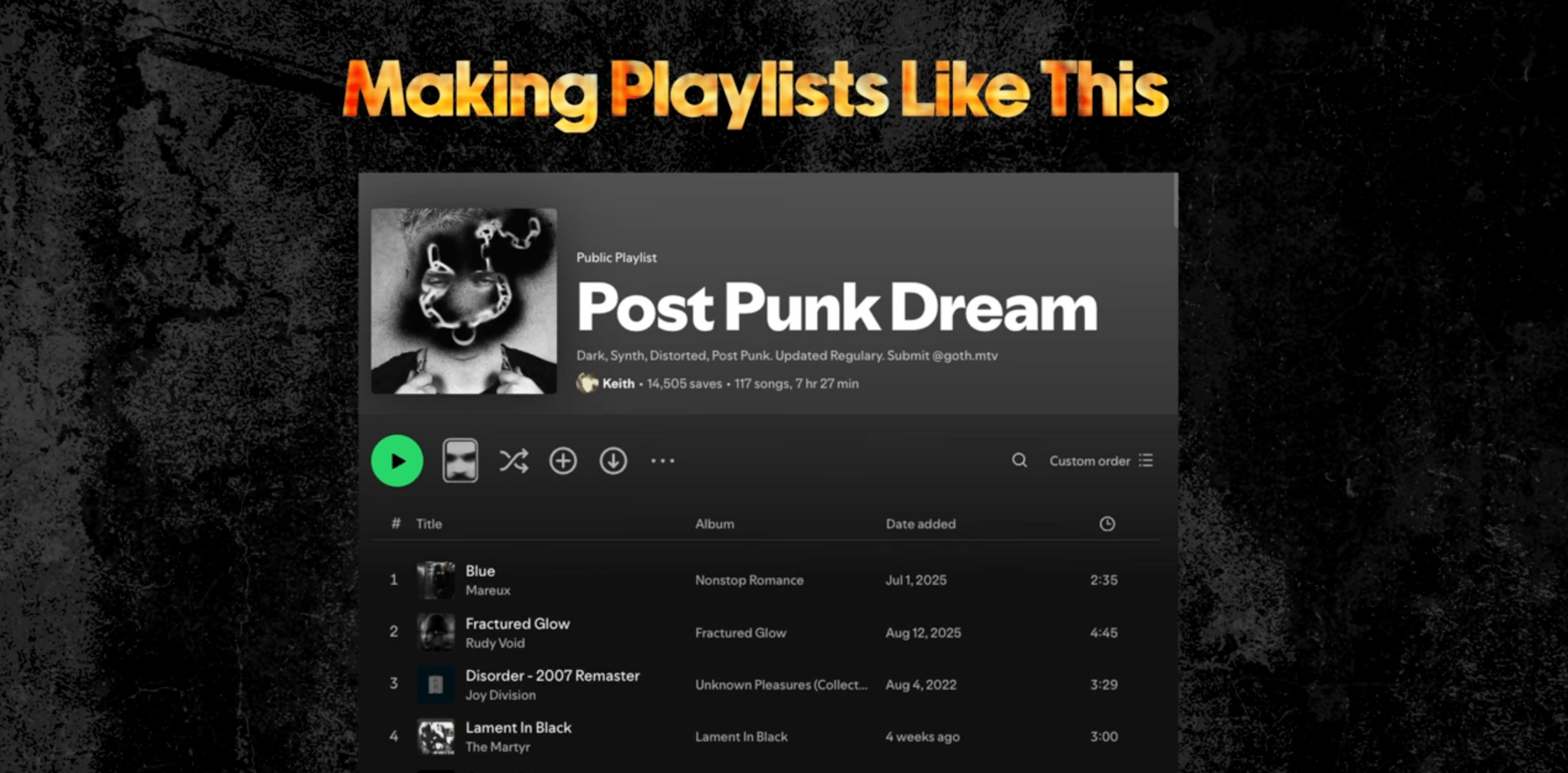
These musicians and their teams don't know their microgenres, sometimes don't even know what a microgenre means, and can't find other artists who sound like them. I normally mock people for this, but I actually have empathy for the struggle. When you don't make easily identifiable music or your work fits into a broad genre, finding other people doing similar work is hard.
There are tons of new tools that are helpful for this. You're going to learn how to find out what you sound like so you can find community, identify which artists to target to find your first fans, and discover what microgenre you're in so you know what playlists to pitch to and which types of creators you should go after.
Why Finding Community Beats Ads
A question I get constantly is about why finding community is so much more effective than ads for your music. For some reason, all of Reddit is fixated on making Andrew Southworth, and I fight despite us being friends and having a podcast together.
* My .4 Cents Podcast
If you can find that rare type of fan who likes discovering music from unknown musicians, you can build your fan base much faster. But you can't do this without knowing how music nerds would describe your music, so you can find where they hang out online and target them.
In my research, where I've dissected hundreds of the most viral acts that have blown up in recent years, what we keep seeing is that those artists know the community that will lift them and how to target them. Finding those smaller artists in your genre and targeting them is how you effectively build a fan base that actually scales without you having to keep putting money into ads and other things that don't work well.
If you don't know the other smaller acts in your genre or microgenre, it's hard to find ways to grow. This is often one of the number one reasons it isn't working for an artist, and once we fix this, they start growing way faster.
The Objectivity Problem
The biggest obstacle to finding what you sound like is objectivity. We've all talked to musicians who are delusional about what they sound like. They say, "I don't know, we don't sound like anything." And because you like this person and don't want to be rude, you think, "Well, you kind of sound like Periphery if they had a bad singer, and it's pretty obvious to everyone but you, chief."
Here's why this happens. It's easy for us to know what our friends' music sounds like because we aren't zoomed into every detail that went into it. But to the outsider, they're not zoomed into that one time you used a didgeridoo on your trap beat, so now you feel like a world music star. All the things that give you depth and all the things you're drawing from, they're just hearing the macro. They're seeing the forest instead of the trees, and some of you are looking so hard you're only looking at the bark of the tree.
This is both an advantage and a disadvantage. When you need to describe your own music, getting help from other people can build on top of what they see because you know what makes you special and deep. Combining the two really helps you get it right.
Being Zoomed-In On Your Music
But it's also helpful to know what people think when they aren't as zoomed into you or paying as much attention to music as you do.
Being zoomed into your music helps you describe what's exciting about it. That's one of the most important things you can do. While you may have developed your music to have lots of little details, we now need to communicate them to people who don't care that much but may care when they get excited and actually hear it.
So we need to go outside of your friend group and talk to others who are, let's be honest, not always so kind on the internet, and make sure you're not making a fool of yourself when you describe your music in terms that only make sense to you.
It's okay to not be good at this at first. You haven't studied yet, which is why you're reading this.
Where to Get Help
Luckily, we have this thing called the internet. One of the first things you could do if you know you're kind of generally R&B is make a TikTok or a Reel, or a YouTube Short and say, "I honestly have no idea what I sound like. Can you please tell me what genre this is?"
This often gives great answers and helps you get followers who are likely to like your music. Since this is like putting together a puzzle, lots of the feedback you get on how you sound will be puzzling and downright weird at times. But eventually, you'll recognize a pattern of what people compare you to and get help describing your sound.
I'll be honest with you, a lot of the time along this way, you're going to find your new favorite group. I've talked to so many artists who say they found some of their favorite artists by doing this.
What I often find at this stage is that people will describe you by comparing you to an artist you don't even listen to. That's often a hint to check out that artist on Spotify, read their bio, look how they describe themselves, then listen to the artists on their "Fans Also Like" page and get familiar with those artists. Those are probably going to be a lot of the artists you'll be using to target to find your first fans as you get to marketing your music.
Tools That Actually Help
We often need to source a lot of answers since we're asking highly subjective questions. There's no true answer to what genre a song is, but there is a consensus among a lot of people. When we know how most people are going to react to a certain song, it makes it easier to figure this out.
Musicstax
The first place we're going is this free website Musicstax. You can look up some of those artists you've already found and sometimes see what genre they are in on that site.
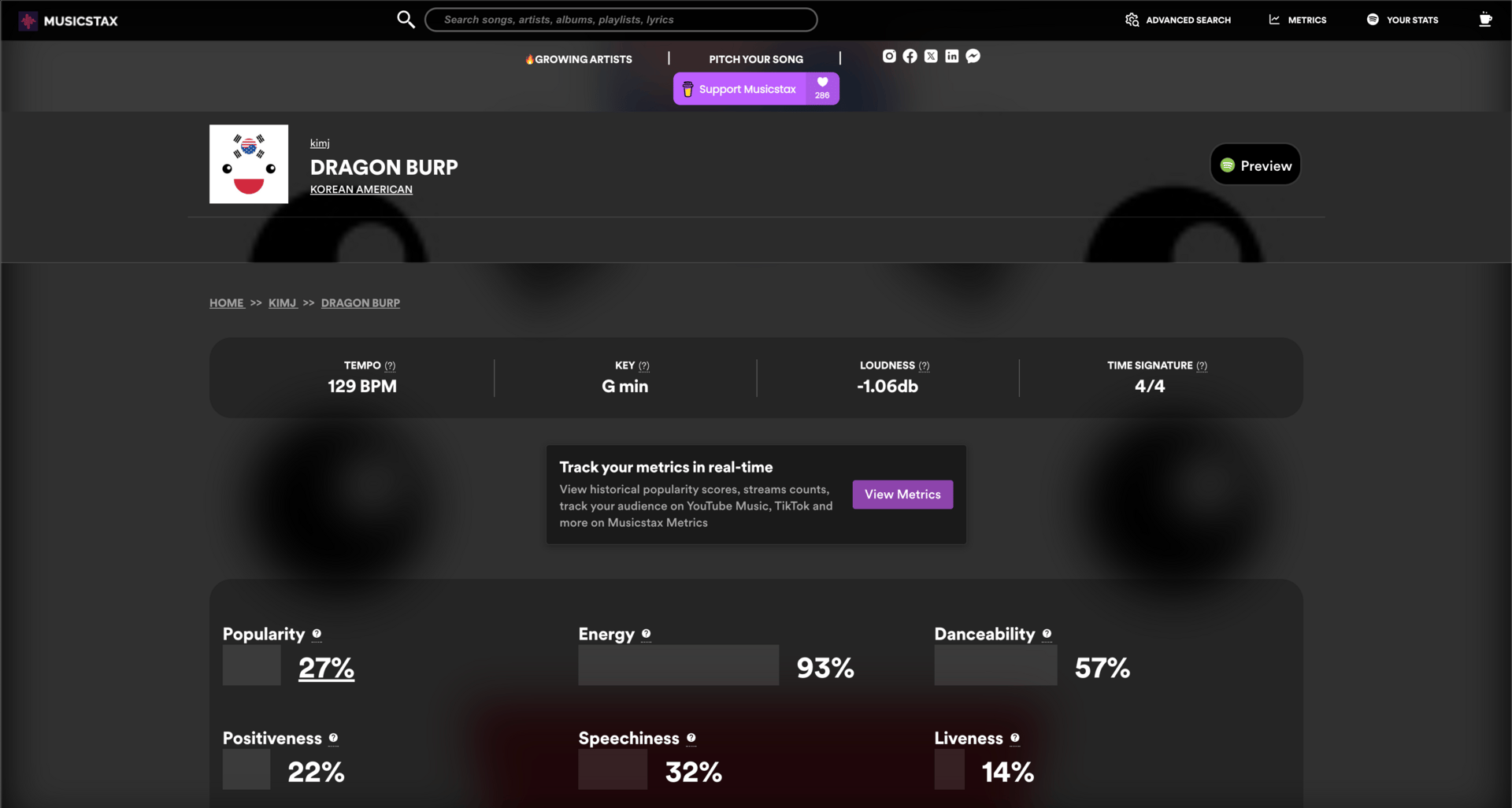
MusicStax is one of life’s great free gifts.
But what you can also see is if you click on any of their songs, and if you find you sound like a particular one of their songs, you can see a whole list at the bottom that the algorithm finds to be similar to these songs.
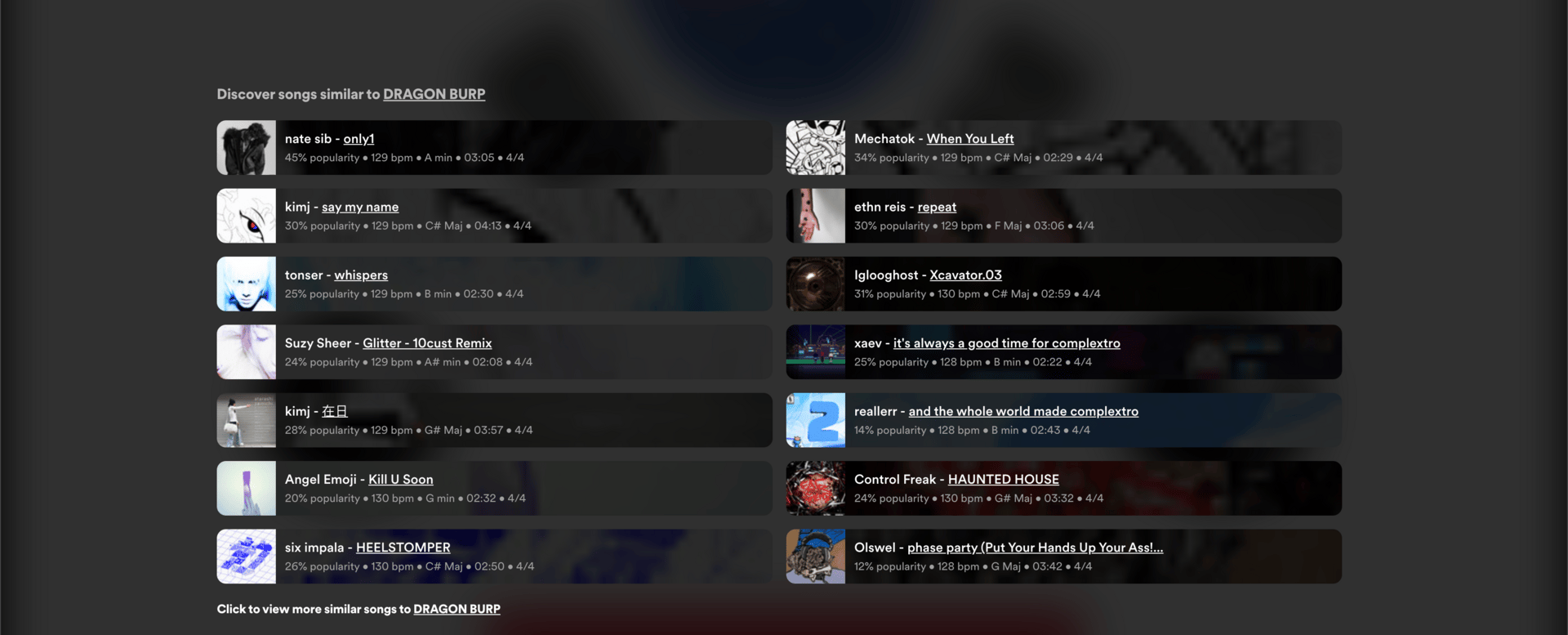
Scroll down to the bottom of any song on MusicStax to see this
Enjoying this? Forward it to a music friend you’d like to be closer to and start a discussion!
If you have a few thousand streams on one of your songs, you can even see what the Spotify algorithm thinks you're similar to already by clicking on your song here. This is one of the best ways I know of to find these clues.
Sometimes, if you click on each artist, it'll show you right on Musicstax which microgenres it considers these artists.
Rate Your Music
After we have a list of a few microgenres, a really helpful place to go is Rate Your Music. It's where the biggest music nerds online hang out and actually discuss music. This is one of the most helpful places to find stuff because these people are onto what's next and what artists are about to be big way before anyone else.
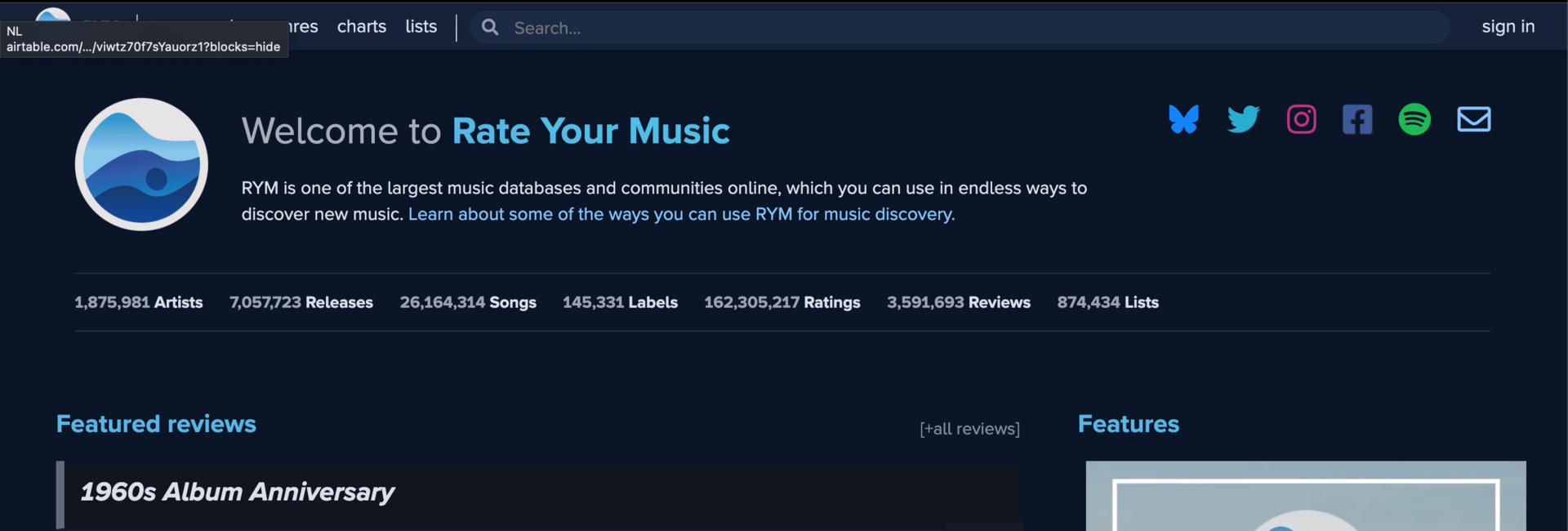
You'll see all the genre names that an artist is tagged under, and then start to look at lists of other artists like this and start to really know if this is your home.
SubmitHub's Genre Detector
While it's not my favorite place, one of the places you can merge AI with nerds is to go to SubmitHub's genre detector tool. This will search through Discogs, which is like one of the biggest music nerd hangouts, and check the genres they use and use AI to detect them.
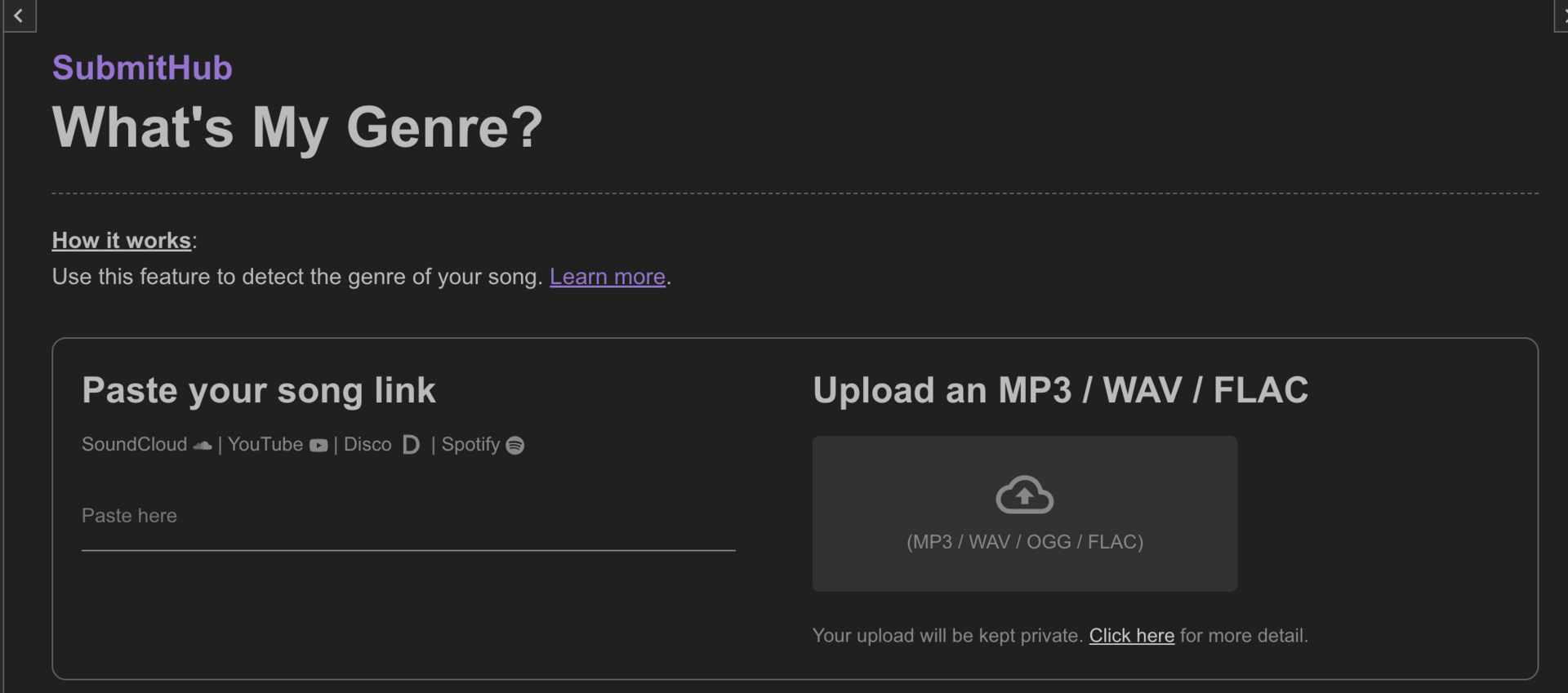
SubmitHub also has another part of its platform that will show you things where you can go to its Hot or Not feature. Inside Hot or Not, you can post your song, and people will comment on it and what they think it sounds like.
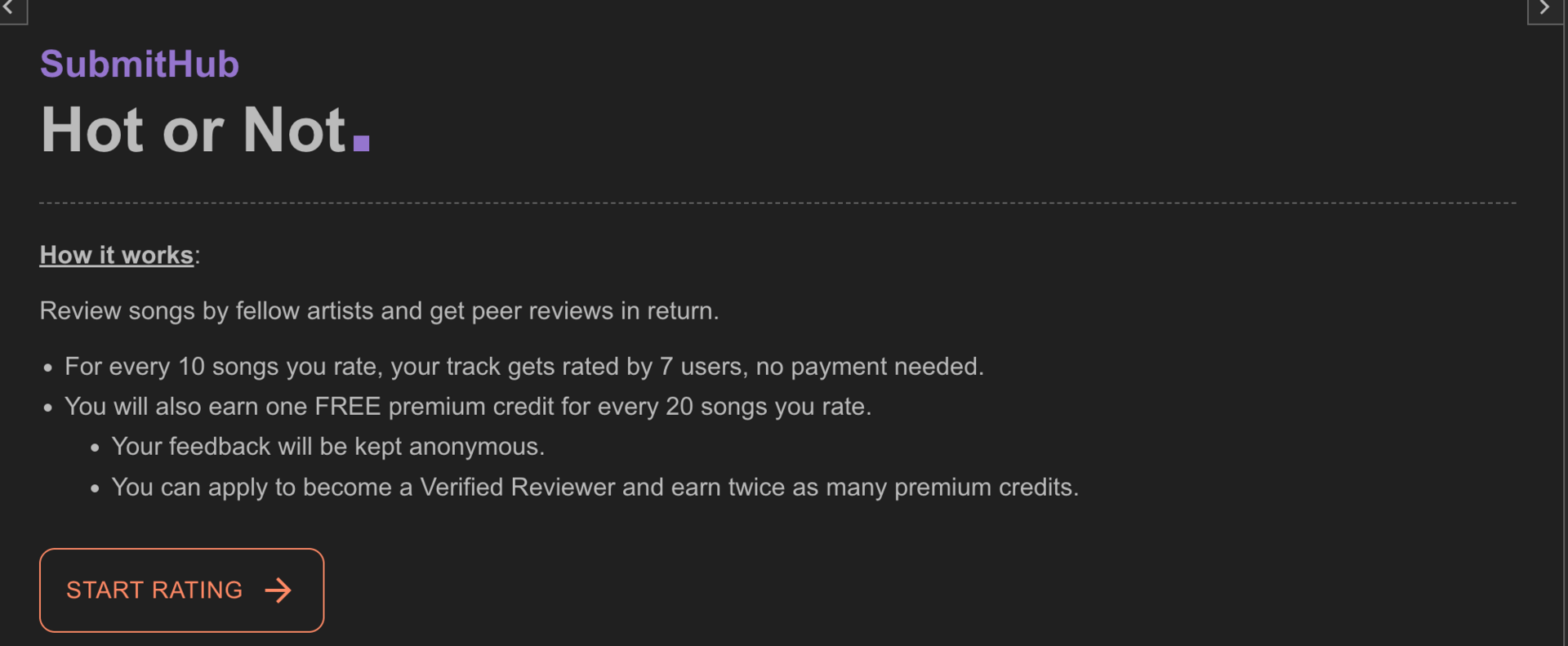
The one catch is that you have to rate other artists to get your music rated. Basically, people hear your music if you listen to theirs and make helpful comments.
Unchartify
After you have a list of genres, you can go somewhere else to really get a vibe for it. One of my favorite sites is this site called Unchartify. I've talked about it a lot in my newsletters. It's a visualization of Spotify's data. What I love about here is that it makes a top chart of different songs in the genre that Spotify has tagged them in. You have all these hundreds of microgenres inside Spotify, and you can see the top songs of each genre inside it, and really get to listen to those songs and see if this is really your microgenre. This will also be really helpful for other marketing.
After you've gotten all that feedback, hit Reddit, where nearly every genre has a subreddit and a weekly thread where you can post your music to get feedback. Just make sure you give back, and also give thoughts on other people's music, since Reddit is a community that only works when everybody's participating. It's super okay to say you really don't know what you sound like and ask people in these communities. They'll often point you to a subreddit you may belong in better than the one you're posting in now, since, let's be honest, they don't want to talk to you if you're not their particular type of nerd.
SoundCloud
Another place you can go is SoundCloud. They have genre tags all over it, and often what people comment on SoundCloud as you get heard will help get you closer to understanding your sound. The people who go here are music nerds who are looking for a free place to discuss music.
Bandcamp
One last stop, if you really feel like it, might be where your community belongs is Bandcamp. On each Bandcamp release, artists are asked to tag their microgenre so people can find them more easily. If you're looking up some of the artists you've found, you may find what other people have described themselves as and a community on Bandcamp.
What to Do With All This Information
After this, you've hopefully found a bunch of microgenre artists that you could start targeting for your music and continue down this rabbit hole. Then it's important to go back to SoundCloud or Reddit and search out where the artists and microgenres you've found along the way are discussed. Become an avid member of all these communities since that's where you're going to make connections to other artists you collaborate with and do cool things with.
Search out Discords and see if there are places people are chatting about this stuff and showing how they're making their music better. There are tons of cool microgenre music producers on Discord.

If you enjoyed this for $5 a month, I break down how musicians are blowing up their music in 5 videos every month. Dissecting artists like Artemas, South Arcade, Tommy Richman, RJ Pasin, Magdelena Bay, Dasha, Gigi Perez & more. We also break down what musicians need to know with the latest changes in social media and music promotion; answer your questions. I also listen to member’s music once a month. Sign up here.
Reply