- Music Marketing Trends by Jesse Cannon
- Posts
- How To Write A Spotify Editorial Playlist Pitch in 2026 (Part 1 of 2)
How To Write A Spotify Editorial Playlist Pitch in 2026 (Part 1 of 2)
The 3 Elements of a Spotify Pitch + Hacks

Jesse Cannon
February 10, 2026
In partnership with

Music Marketing Trends is a Newsletter by Jesse Cannon that breaks down how musicians really get their music heard. If you know a story we should be telling or an artist we should cover just hit reply to this email.
Learn how to make every AI investment count.

Successful AI transformation starts with deeply understanding your organization’s most critical use cases. We recommend this practical guide from You.com that walks through a proven framework to identify, prioritize, and document high-value AI opportunities.
In this AI Use Case Discovery Guide, you’ll learn how to:
Map internal workflows and customer journeys to pinpoint where AI can drive measurable ROI
Ask the right questions when it comes to AI use cases
Align cross-functional teams and stakeholders for a unified, scalable approach
Part 1/2: How to Write a Spotify Editorial Pitch That Gets You Heard
I see musicians missing the mark on Spotify editorial pitches 99% of the time. This matters because editorial playlists are the number one mover of nobody to somebody in music today, second only to TikTok. Many musicians know how to make a great song, but are absolutely clueless about how to talk about themselves in a way that would excite anyone about their music.
The saddest thing that could happen to an early thriving musician's career is writing an amazing song and then pitching it to Spotify with "I was delivering pizzas, and then it came to me to write a song about the girl I delivered to. And let me tell you, my dude, this shit slaps."
Pre-Pitch Essentials
Before we even get started, Spotify values promoting artists who make it look good. They want to make sure you do all the right things to your profile that keep users engaged instead of leaving the app.

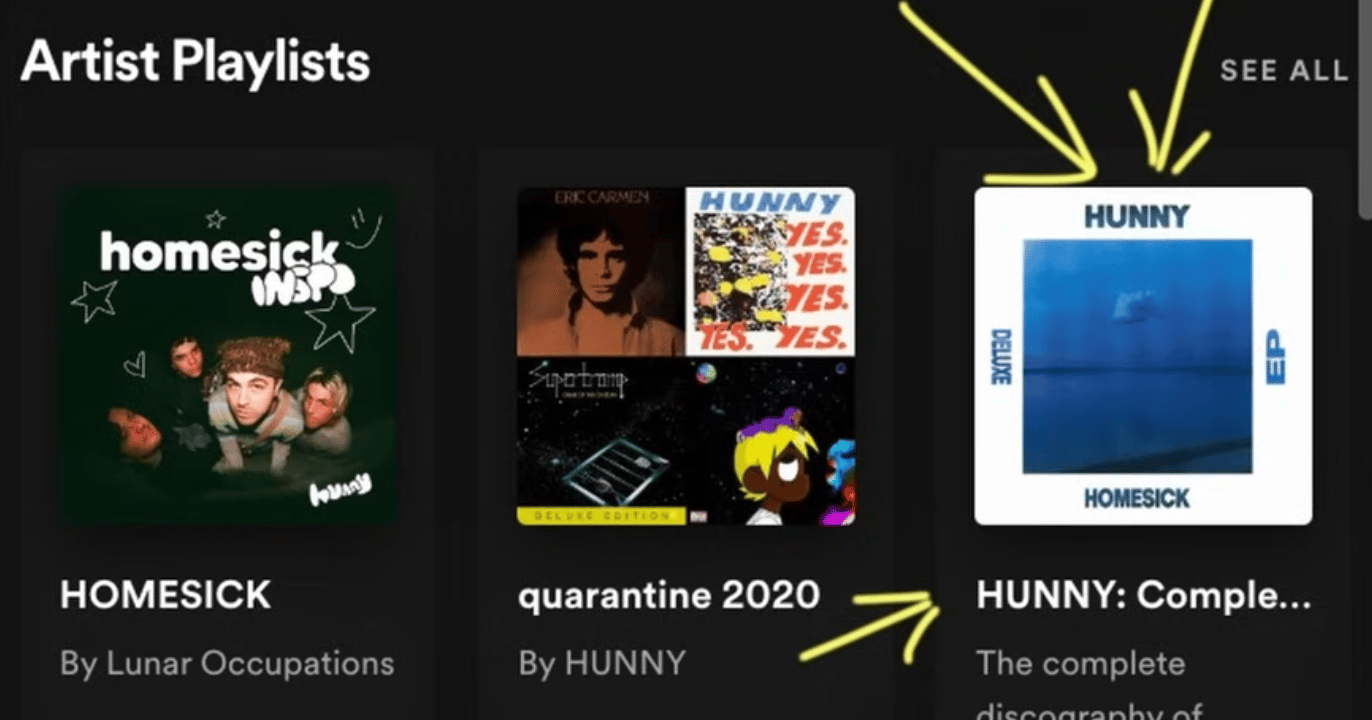
Update your profile and artist playlists—if you start to get popular, people can see all the neat features of Spotify and subscribe, which helps them keep growing.
You have a window of 28 to seven days to get considered for Spotify editorial playlists. Since you have little chance as it is with all the competition out there, take the longer end and try to submit it four weeks in advance if possible.
A lot of what helps you get on a Spotify editorial playlist is that your past material is doing well on the platform. This means having a popularity score of around 25% or above on your track and getting on some user playlists, along with organic streams. (Use musicstax.com to find your popularity score)

If that's not happening yet, don't get too depressed. This really just helps you get more consideration, but Spotify claims they listen to the tracks that get pitched to them. I've seen a few artists I consult with go from zero traction to an editorial playlist that really helps them without ever having released a song or having their past material get very little attention.
The Three Elements of a Great Pitch
You only have 500 characters to make your pitch—that's characters, not words. That's about two tweets’ worth of space to get this playlist excited about you.
Element One: Describe What Makes You Excited
This should be about one sentence, but you can use up to 250 characters of your 500-character limit since this is one of the most important parts.
Knowing what makes you excited is crucial because everyone, from managers to labels, needs to know this. When I was younger, my friend Ben Weinman from The Dillinger Escape Plan told me the reason he managed his own band—even though they were huge and tons of people would want to manage them—is no one knew how to sell his band as well as him. I'll be honest, despite respecting Ben immensely, I thought he was out of his mind. But one of the many lessons I've learned over the years is that he was right.
Knowing what makes you special and how to sell it to other people is what opens doors for musicians. When I wonder why a mediocre band gets bigger than another band that's just as mediocre, more times than not, the band that's better at getting opportunities is better at selling themselves. While many people perceive this as connections, there's some truth to that. But the sell has become more and more important in recent years. Ben has proven right that the crucial skill of your manager or whoever handles your music is knowing how to spin the sell and tell a story about why you're so exceptional.
This goes tenfold for pitching your music. Before you even pass go here, you need to figure out what's exciting about you because this is where these pitches fail, even when the music's good. More often than not, the pitches Spotify gets are wack.
The Curiosity Route
If there's not much excitement about you, all hope is not lost. There's another route: get people curious to listen to you. When you take this route, write something that will make the reader think, "Wow, I'd like to hear that," or "Ooh, what does that sound like?"
Find a way to describe your sound that's intriguing and will make the reader click because their brain is spinning at the thought of what you just said.
Here are some template ideas:
"If Periphery had the pop vocal choruses of Taylor Swift."
"You know the first time you heard 100 gecs, and you wondered how anyone could combine those sounds? Well, Incel Hypebeast takes that ethos one step further."
"You've heard of math rock's complex rhythms. Well, Ayahuasca Edge Break goes the opposite way by making the simplest, minimal songs that still entertain listeners."
The biggest problem with this approach is that music is highly emotional and specific. If the person you're pitching isn't necessarily intrigued by the curiosity you've piqued because they don't really care what it would sound like if you mixed The Cure with ska, then they aren't going to actually be curious. This is why I prefer trying to get excitement from the gatekeeper. Even if the music is not for them, they will give more of a chance to something that just sounds exciting since they want to make sure they aren't missing out on something they should know about or an opportunity.
The Music Writer Cheat Code
There's no one better at telling stories when there isn't much there than music writers. It's literally their job. Many of the great music bios you may have seen on Spotify are written by either a label person, a manager, or a music writer. No one has read more of these bios, and they know the game inside and out.
Many music writers need more money because it doesn't pay very well, and they do this on the side. They don't take credit for it because it goes against journalistic ethics, but they take that check to their bank discreetly. This has the added benefit that it could often be how you get an influential person in your music community to hear you, since that's what music writers are. If they are into it, those are often the people who tell everyone else what to listen to.
I freelance for Rolling Stone, aka the biggest music publication in the world, and you know who often hangs out with music writers? Managers, A&Rs, and other music biz types, since these writers are often hip to new artists on the rise, which the managers and A&Rs want to find out about. Hiring one of these writers who regularly writes about your style of music to help figure out how to describe your sound, write a pitch, or bio can be great for more doors opening for you and getting you heard by the right people in your community.
Understanding the Competition
When you are pitching, you're up against placements for the bigger players of this game—each of the three major labels and indie distributors like Redeye, The Orchard, Stem, UnitedMasters, and Kobalt. They all have employees pitching individually through account reps who are buying drinks for the playlist curators and dinners for favors to get features on these playlists.
How do I know this? I'm out there getting these drinks with these people and getting drunk with them because I'm in the music business in Brooklyn, and that's what we do. I dated someone whose job was partly to buy drinks for playlist curators to help increase their relationship to secure playlist placements.
With all these free drinks going around, you're probably wondering how you're ever going to get a placement when you can't do that. Thankfully, Spotify lets a bunch of you through the gate because what is better advertising than when you are telling a story of how you blew up, the first thing that got you popular was Spotify's playlists?
Spotify competes with Apple Music, and they're trying to be hipper than them. If people are finding their new favorite artists before anyone else because these curators found them early on, that keeps their job safe, and it keeps DIY artists still getting placements. Spotify knows that subscribers will keep using it if they keep showing you all the hip, new, great music they want to hear. Since every other streaming service has the same songs, the one thing they can offer is curating great playlists.
That's why you have a chance—they might see you as an opportunity to be that hip artist that keeps somebody subscribing to their service. They want to give DIY unknown artists spots. But there's so much competition since tens of thousands of songs are uploaded to Spotify daily. The idea is that they are going to be impressed by you and want to listen to your song if your pitch is exciting.
Element Two: Use Cosigns to Get Them Excited
If you have an amazing quote about you from someone influential in the genre, use it—whether that's another musician you know who has fans in the genre, a review you've gotten, or whatever. Have you been featured in prominent blogs, magazines, radio, DJs, or most of all, other Spotify playlists of the genre? Make sure those are in this pitch.
Big playlists pick up artists from small playlists, and those cosigns are important. Ex-members of bands, label names you're affiliated with, if you work with a big producer who has big credits—all these help curators know that you're in the genre and that you know the genre's keywords.
Know Your Community and Niche
Look through all the playlists in your genre and type in every keyword around your genre, so you know what's going on. Are there micro-genres you fall into? Make sure to use those community genre buzzwords in your pitch.
For example, I'm really into hyperpop. It has its own editorial playlist on Spotify, but the artists on this playlist are also known as being in other genres like bubblegum bass, PC Music, or even lo-fi pop. If you know how to use these identifiers in your pitch, you show the curator you know the scene and speak the lingo, which goes shockingly far in your pitch. But don’t be recidculous, you can’t just write “This deserves to be on Rap Caviar bro”, that’s not gonna work.
If you want to be on a big playlist, you need to hit Chartmetric and look at the playlist journeys to the playlist you want to be on. Playlist journeys show you the smaller playlists that have smaller artists on them before they get on the big playlists. You can learn which ones feed the big playlist, so you could climb up the ladder to get there.
Enjoying this? Forward it to a music friend you’d like to be closer to and start a discussion!
If you have no cosigns or space from not having that next element of our pitch, adding a quick sentence like "This song is perfect for Indie Fresh Finds or New Indie Spotlight," or some other small playlist you belong to, is a perfect addition to your pitch.
One of the recurring things I stress is that when you don't have connections or names to drop, you're an island, and then algorithms have no idea what to do with you, and you lose so many benefits. You really need to do your community work.
Element Three: List How You're Going to Promote the Song
Something like "We have a music video and full press pitch launching" is great. Even "radio campaign, music video, and 45-date summer tour" works well.
A lot of you are thinking you're not doing any of that. The trick here is the playlist curator can't ever tell what you're going to do in the future before they give you this playlist placement, but it does seem like you get it, and you're actually working.
This part is recommended by Spotify, but if you have enough to say in the other two parts, this is definitely the part that could get skipped, especially if you have a great cosign or two and a small playlist placement suggestion ready to go. This really is the least important part. They just want you to feel like you're going to bring people to them, and they won't be doing all the work.
Now you've got the three elements down. But here's where most musicians blow it—they think writing the pitch once is enough. The truth is, you need to see real examples of pitches that worked, understand how to refine yours through multiple rewrites, and make strategic choices in the actual submission process that most artists miss. There's a specific way to choose your genre tags, a location trick for getting placements right now, and a recovery strategy if you don't get placed the first time that sets up your next release for success. I'll show you actual pitch examples and walk you through the entire submission process next week in Part 2.

If you enjoyed this for $5 a month, I break down how musicians are blowing up their music in 5 videos every month. Dissecting artists like Artemas, South Arcade, Tommy Richman, RJ Pasin, Magdelena Bay, Dasha, Gigi Perez & more. We also break down what musicians need to know with the latest changes in social media and music promotion; answer your questions. I also listen to member’s music once a month. Sign up here.
Reply